
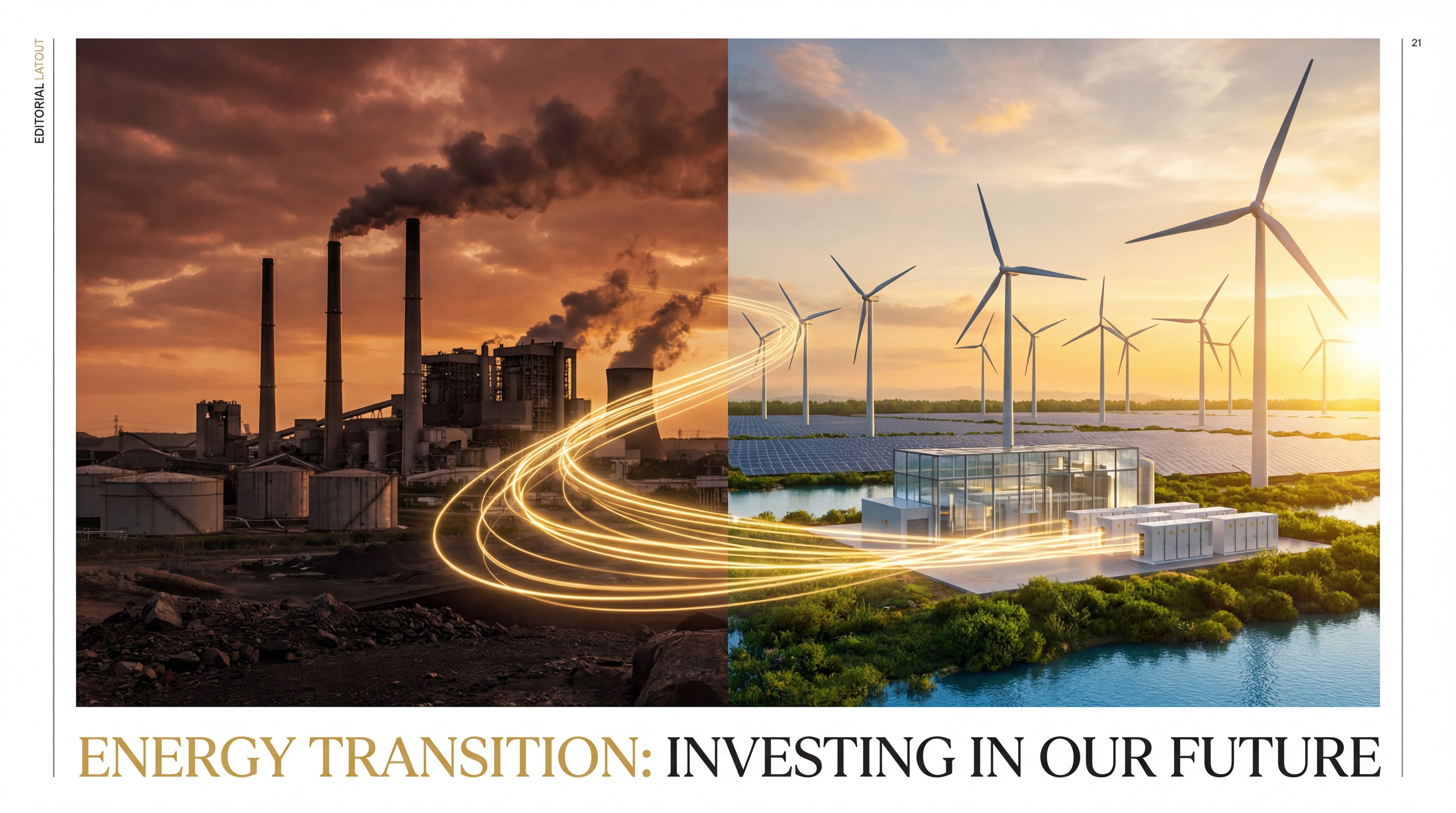
Featured in The Edge Malaysia
In November 2019, I was interviewed by The Edge Malaysia for their Responsible Business 4.0 Special Report. The conversation centred on the solution-focused strategic directions we were employing at VIA Sustainable Technologies, our clean energy technology global commercialisation platform.
The interview explored a fundamental challenge that continues to shape our work today: how do we bridge the gap between the urgent need for climate action and the commercial realities that drive private sector participation?
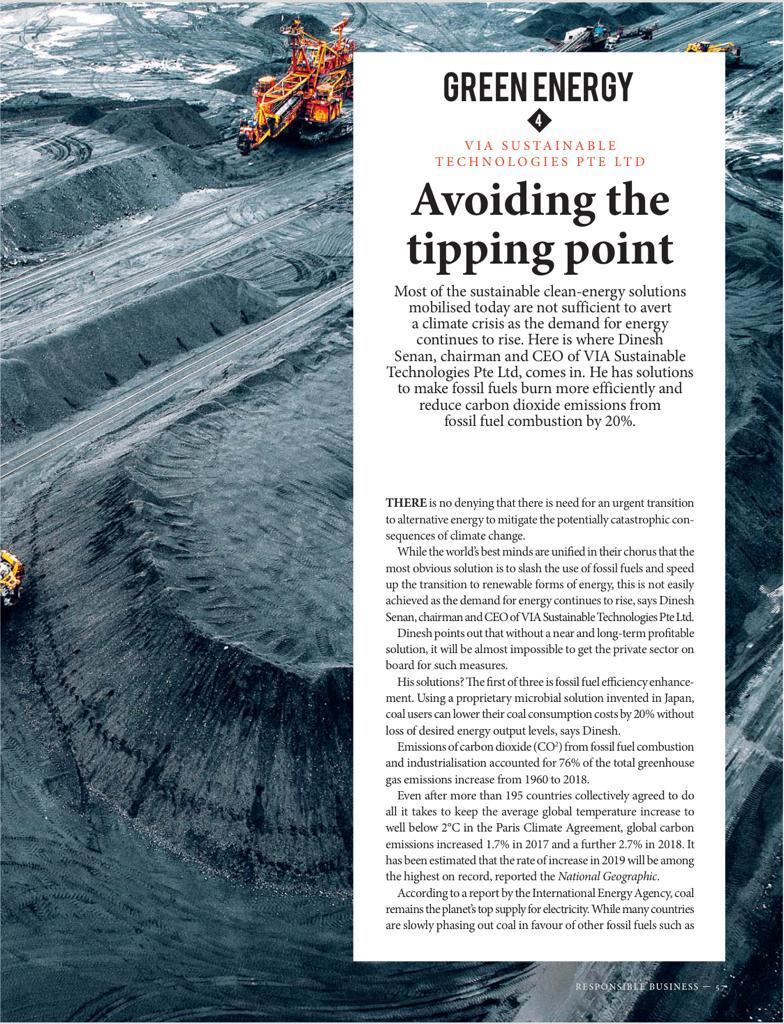
The Urgent Transition
There is no denying that there is a need for an urgent transition to alternative energy to mitigate the potentially catastrophic consequences of climate change. While the world's best minds are unified in their chorus that the most obvious solution is to slash the use of fossil fuels and speed up the transition to renewable forms of energy, this is not easily achieved as the demand for energy continues to rise.
The hard reality is that 90% of global energy consumption remains fossil fuel based. The transition to renewables, while essential, cannot happen overnight. And without a near and long-term profitable solution, it will be almost impossible to get the private sector on board for such measures.
Making Fossil Fuels Cleaner - The Near-Term Imperative
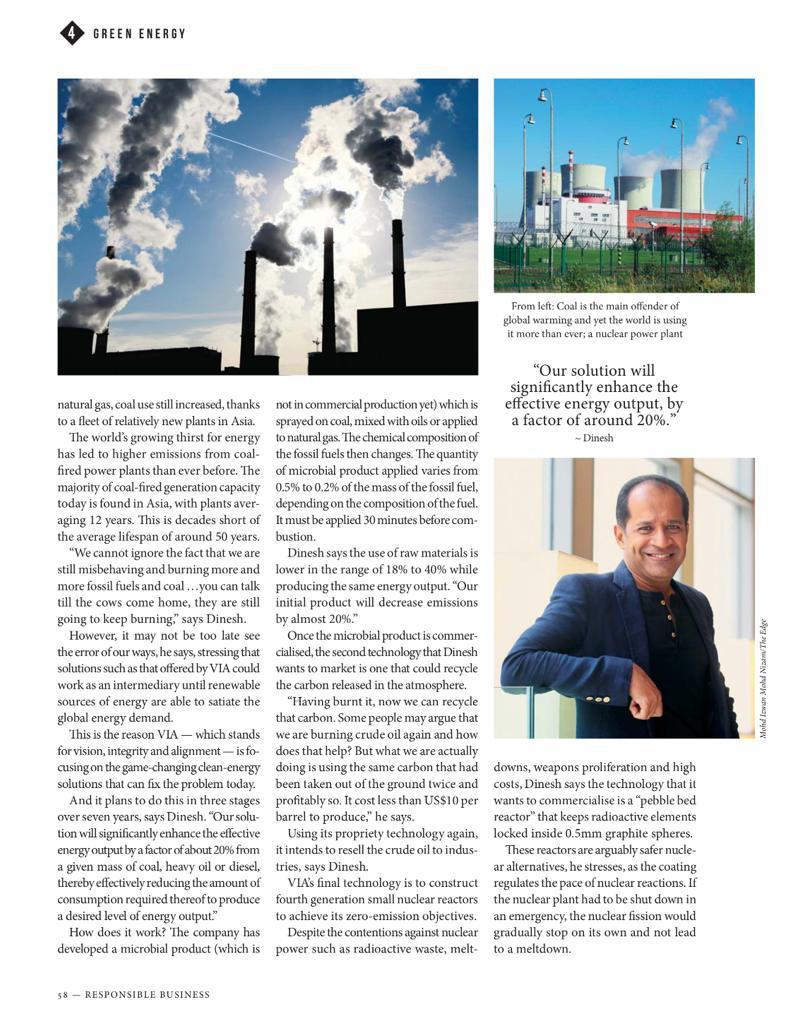
This is where practical, deployable solutions become critical. At VIA Sustainable Technologies, we were focused on technologies that could make fossil fuels burn more efficiently and reduce carbon dioxide emissions from fossil fuel combustion by approximately 20%.
While this may sound modest against the scale of the challenge, consider the implications: a 20% reduction in emissions from the world's existing fossil fuel infrastructure, deployed at scale, would represent an enormous step forward - buying precious time for the longer-term transition to zero-emission energy sources.
The key insight is that we cannot afford to wait for the perfect solution. We need:
- Near-term solutions that reduce emissions from existing infrastructure today
- Medium-term investments in scaling renewable energy capacity
- Long-term commitment to breakthrough technologies that can fundamentally transform our energy systems
The Private Sector Imperative
Perhaps the most critical insight from the interview was this: climate solutions must be commercially viable to achieve scale. Altruism alone will not drive the trillions of dollars of investment required. The private sector needs to see a pathway to returns.
This principle has been foundational to our approach - from VIA Sustainable Technologies to the work we now pursue at ACT! VCC. Every technology we evaluate, every investment we structure, must satisfy both the climate impact imperative and the commercial viability test.
From VIA to ACT! VCC
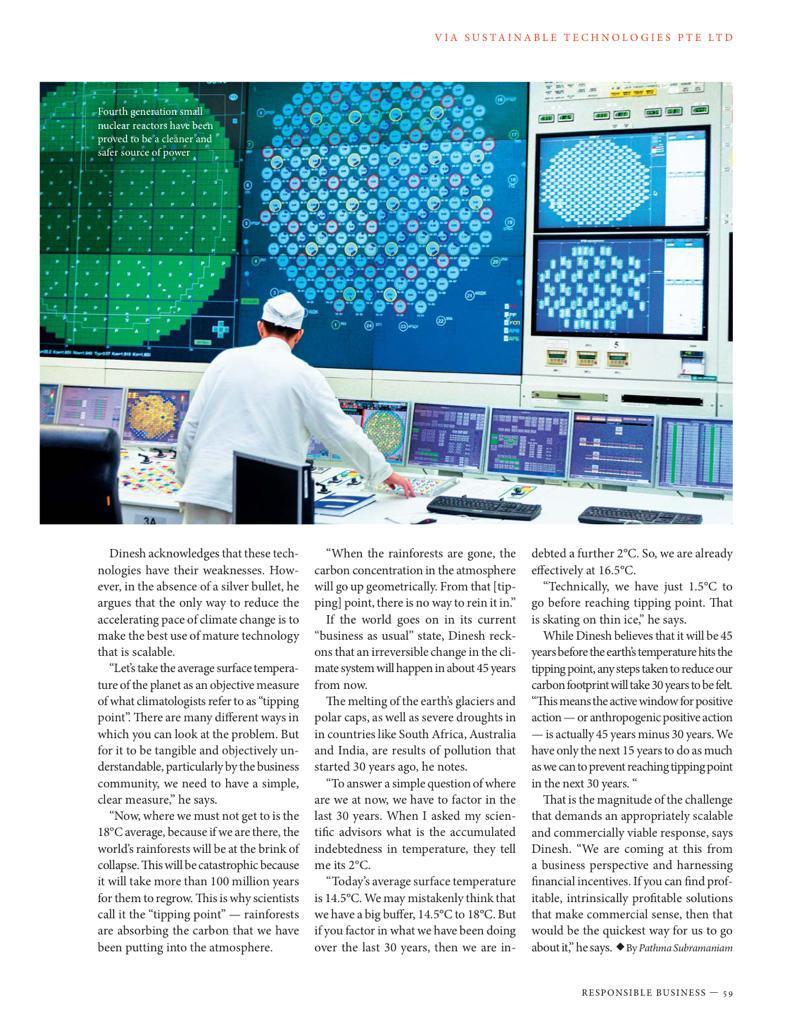
The strategic thinking that underpinned VIA Sustainable Technologies - the focus on commercially deployable clean energy solutions, the emphasis on bridging the gap between innovation and global-scale deployment - directly informed the creation of ACT! VCC.
The VIA Sustainable Technologies solution set and platform has since been fully subsumed within the ACT! VCC Investments Platform, allowing us to integrate these proven clean energy technologies into a broader, more sophisticated investment and deployment framework.
What has evolved is the scope and sophistication of our approach. ACT! VCC operates as a Variable Capital Company structure, enabling us to deploy capital across a broader range of climate technologies while providing institutional investors with the governance and flexibility they require.
The lesson from those early days remains as relevant as ever: the climate transition will succeed only when it offers profitable pathways for private capital. Our role is to identify, evaluate, and deploy the technologies that make this possible.